Valitse alueesi

Valitse alue, joka parhaiten vastaa sijaintiasi tai mieltymyksiäsi.

Valitse sivuston kieli

Tämä asetus hallitsee käyttöliittymän kieltä, mukaan lukien painikkeet, valikot ja kaikki sivuston tekstit. Valitse haluamasi kieli parhaan selauskokemuksen saamiseksi.

Valitse kielet työpaikkailmoituksille

Valitse kielet työpaikkailmoituksille, jotka haluat nähdä. Tämä asetus määrittää, mitkä työpaikkailmoitukset näytetään sinulle.
Max Planck Institute for Biophysical Chemistry (MPIbpc)

Max Planck Institute for Biophysical Chemistry (MPIbpc)

Vieraile verkkosivulla

Tietoja työnantajasta

maxplanck-header_image
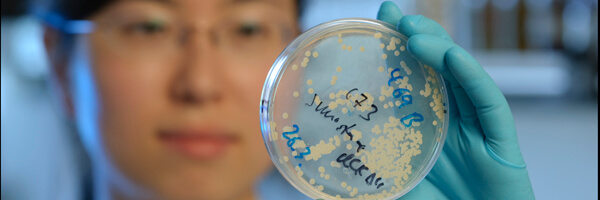
The research at the Max Planck Institute (MPI) for Biophysical Chemistry encompasses a wide spectrum of scientific topics and techniques. Of central concern is the mechanisms by which cells, organelles and biomolecules fulfill their manifold tasks. Ultra-high-resolution microscopy, nanotechnology, nuclear magnetic resonance spectroscopy, mass spectrometry and computer simulation are employed to delve ever-further into the nanocosmos of living cells. The institute's researchers investigate how spliceosomes correctly configure genetic information, how ribosomes synthesize proteins, how nerve cells communicate with one another via synapses, how cellular logistics are controlled or how protein aggregates damage cells. The study of the cellular cosmos is also intimately connected with the study of the organism. Scientists at the institute examine how living beings develop, how their sleep-wake cycles are controlled, how organ-specific stem cells are formed and in how far obesity and metabolic diseases are caused by genetic misregulation. The MPI for Biophysical Chemistry is also a pioneer in the development of methods of measurement and analysis which allow a clearer view into cellular life processes. Examples include far-field microscopy on the nanometer scale, magnetic resonance tomography and spectroscopy, optical spectroscopy and atomistic computer simulation. In all of its research, the institute pursues a strong interdisciplinary approach. The 12 departments and 24 independent research groups complement each other with regard to their orientations and methodology and collaborate extensively with one another, with other institutes around Göttingen, with the University of Göttingen as well as with colleagues nationally and internationally. The support of young scientists is also of primary importance to the institute, and is reflected in the large number of independent research groups. In addition, the independent research laboratory Biomedical NMR Research GmbH (headed by Prof. Jens Frahm) is affiliated with the institute.

Työnantajan sijainti

Löydä samanlaisia työnantajia

Fraunhofer-Gesellschaft
Fraunhofer-Gesellschaft Saksa 3 avointa työpaikkaa
University of Cologne
University of Cologne Saksa 35 avointa työpaikkaa
Bergische Universität Wuppertal (BUW)
Bergische Universität Wuppertal (BUW) Saksa 5 avointa työpaikkaa
Forschungszentrum Jülich GmbH
Forschungszentrum Jülich GmbH Saksa 3 avointa työpaikkaa
Lisää työnantajia

Kiinnostavia artikkeleita

Why KTH Is the Ideal Place to Shape the Future Through Your Work
Why KTH Is the Ideal Place to Shape the Future Through Your Work KTH Royal Institute of Technology 5 min arvioitu lukuaika
Bringing Society’s Voice into Science
Bringing Society’s Voice into Science University of Oulu 5 min arvioitu lukuaika
Bringing Artificial Intelligence Into the Real World
Bringing Artificial Intelligence Into the Real World Mohamed bin Zayed University of Artificial Intelligence (MBZUAI) 4 min arvioitu lukuaika
Elevate Your Career and Lifestyle at the University of Oulu
Elevate Your Career and Lifestyle at the University of Oulu University of Oulu 5 min arvioitu lukuaika
Connecting the Dots With Life Course Epidemiology
Connecting the Dots With Life Course Epidemiology University of Oulu 4 min arvioitu lukuaika
Lisää artikkeleita

Löydä vastaavanlaisia työpaikkoja