Elige tu región

Selecciona la región que mejor se ajuste a tu ubicación o preferencias.

Elige el idioma del sitio

Esta configuración controla el idioma de la interfaz de usuario, incluidos los botones, los menús y todo el texto del sitio. Selecciona tu idioma preferido para la mejor experiencia de navegación.

Elige los idiomas para los anuncios de empleo

Selecciona los idiomas para los anuncios de empleo que deseas ver. Esta configuración determina qué anuncios de empleo se mostrarán.
Max Planck Institute for Biophysical Chemistry (MPIbpc)

Max Planck Institute for Biophysical Chemistry (MPIbpc)

Visitar página Web

Sobre el empleador

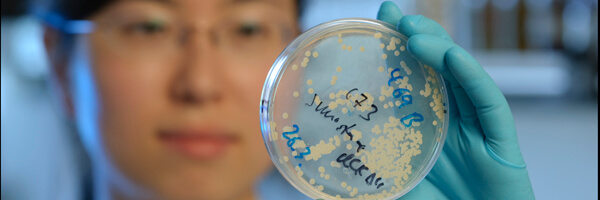
maxplanck-header_image
The research at the Max Planck Institute (MPI) for Biophysical Chemistry encompasses a wide spectrum of scientific topics and techniques. Of central concern is the mechanisms by which cells, organelles and biomolecules fulfill their manifold tasks. Ultra-high-resolution microscopy, nanotechnology, nuclear magnetic resonance spectroscopy, mass spectrometry and computer simulation are employed to delve ever-further into the nanocosmos of living cells. The institute's researchers investigate how spliceosomes correctly configure genetic information, how ribosomes synthesize proteins, how nerve cells communicate with one another via synapses, how cellular logistics are controlled or how protein aggregates damage cells. The study of the cellular cosmos is also intimately connected with the study of the organism. Scientists at the institute examine how living beings develop, how their sleep-wake cycles are controlled, how organ-specific stem cells are formed and in how far obesity and metabolic diseases are caused by genetic misregulation. The MPI for Biophysical Chemistry is also a pioneer in the development of methods of measurement and analysis which allow a clearer view into cellular life processes. Examples include far-field microscopy on the nanometer scale, magnetic resonance tomography and spectroscopy, optical spectroscopy and atomistic computer simulation. In all of its research, the institute pursues a strong interdisciplinary approach. The 12 departments and 24 independent research groups complement each other with regard to their orientations and methodology and collaborate extensively with one another, with other institutes around Göttingen, with the University of Göttingen as well as with colleagues nationally and internationally. The support of young scientists is also of primary importance to the institute, and is reflected in the large number of independent research groups. In addition, the independent research laboratory Biomedical NMR Research GmbH (headed by Prof. Jens Frahm) is affiliated with the institute.

Ubicación de la empresa

Descubre empleadores similares

Fraunhofer-Gesellschaft
Fraunhofer-Gesellschaft Alemania 3 posiciones abiertas
University of Cologne
University of Cologne Alemania 35 posiciones abiertas
Bergische Universität Wuppertal (BUW)
Bergische Universität Wuppertal (BUW) Alemania 5 posiciones abiertas
Forschungszentrum Jülich GmbH
Forschungszentrum Jülich GmbH Alemania 3 posiciones abiertas
Más empleadores

Esto puede ser de tu interés

Why KTH Is the Ideal Place to Shape the Future Through Your Work
Why KTH Is the Ideal Place to Shape the Future Through Your Work KTH Royal Institute of Technology 5 minutos de lectura
Bringing Society’s Voice into Science
Bringing Society’s Voice into Science University of Oulu 5 minutos de lectura
Bringing Artificial Intelligence Into the Real World
Bringing Artificial Intelligence Into the Real World Mohamed bin Zayed University of Artificial Intelligence (MBZUAI) 4 minutos de lectura
Connecting the Dots With Life Course Epidemiology
Connecting the Dots With Life Course Epidemiology University of Oulu 4 minutos de lectura
Más historias

Descubrir trabajos relacionados