Elige tu región

Selecciona la región que mejor se ajuste a tu ubicación o preferencias.

Elige el idioma del sitio

Esta configuración controla el idioma de la interfaz de usuario, incluidos los botones, los menús y todo el texto del sitio. Selecciona tu idioma preferido para la mejor experiencia de navegación.

Elige los idiomas para los anuncios de empleo

Selecciona los idiomas para los anuncios de empleo que deseas ver. Esta configuración determina qué anuncios de empleo se mostrarán.

Stockholm University’s Department of Computer and Systems Sciences

Stockholm University’s Department of Computer and Systems Sciences

Digital development for humans and society

320

Turnover MSEK

220

Employees

20

Full professors

65

Doctoral students

4600

Students (46% female)

DSV - a Swedish pioneer

The Department of Computer and Systems Sciences (DSV) is a Swedish pioneer in computer and systems sciences. Founded in the 1960s, we have a long-standing tradition of research and education at the forefront.

Guided by curiosity, we continue to break new ground. We focus on the interplay between new technology and humans, and we engage in topics highly relevant to society.

With 220 employees and 4,600 students, the department is one of Stockholm University's largest. DSV provides a strong, dynamic, and truly international environment where researchers thrive.

DSV - a Swedish pioneer

Explore our research

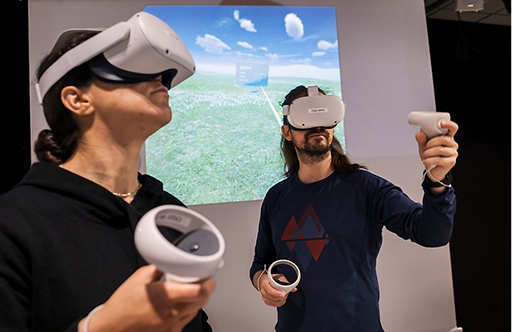
AI and health, machine learning, autonomous vehicles and robots, edtech, co-created MR experiences, cybersecurity and digital games are just a few of the topics that interest us. DSV's research portfolio is diverse and multifaceted.

Many projects are carried out in cooperation with other academic institutions, private companies or public organisations.

Read about us
 

Research subjects

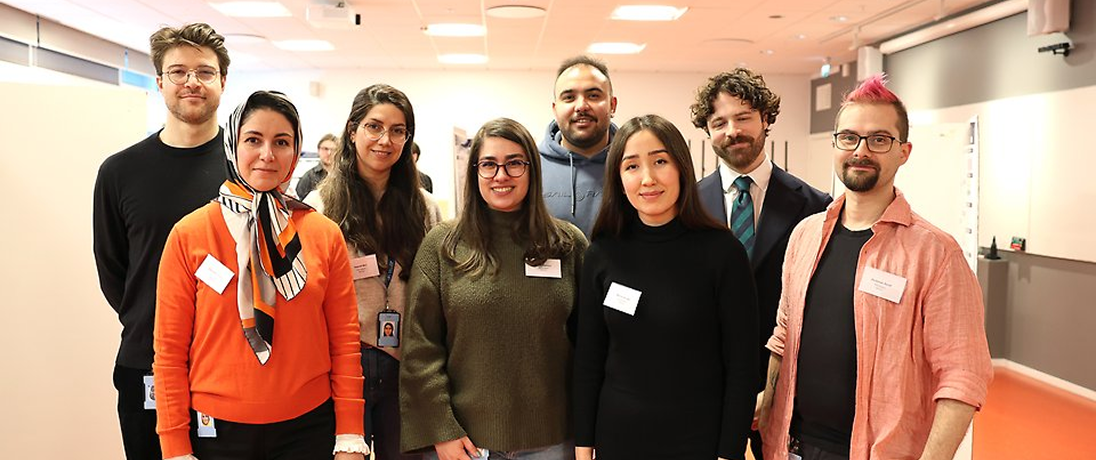
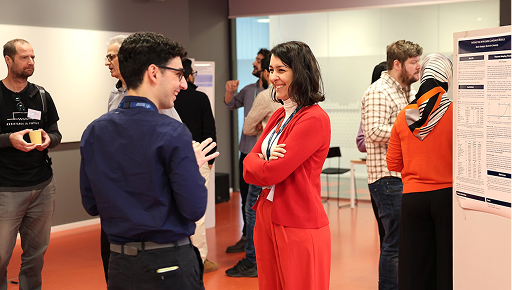
The research environment at DSV is genuinely international and multidisciplinary, and we collaborate with many private and public organisations. More than 80 senior researchers and 65 PhD students are working together to build new knowledge and develop the field of computer and systems sciences.

DSV's research is divided into nine research subjects:

  • AI and Data Science

  • Business Process Management and Enterprise Modelling

  • Cyber Security

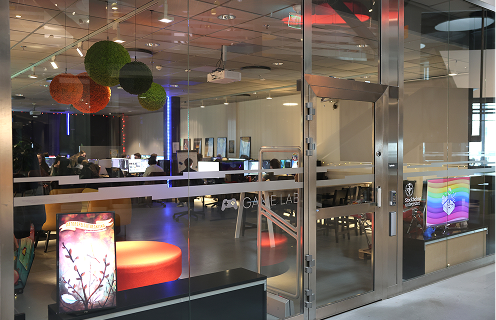
  • Digital Games and Simulation

  • Digital Transformation and Governance

  • Human-Computer Interaction

  • Language Technology

  • Risk and Decision Analysis

  • Technology Enhanced Learning


More about our research subjects
DSV Research subjects

The core questions

How can information and communication technologies (ICT) systems be designed, developed and used in different contexts?

And how do ICT systems relate to people, organisations and society?

DSV Research Projects
 

Research projects

Research at DSV spans a broad field and researchers have academic freedom to explore the topics they're interested in. In many projects, we collaborate with researchers in other departments at the Stockholm University, for example within Law and Psychology.

We also have research collaborations with universities in Sweden and abroad, for example KTH, Brunel University and Boston University. Other projects involve private and public organisations like Ericsson, Region Stockholm and Scania.

Find all research projects here
 

AI towards fair decisions

Professor Panagiotis Papapetrou and his team explore how artificial intelligence can be made more fair, transparent and responsible as AI learn from the biased world around us.

Through real-world examples from healthcare, education, and recruitment, this video reveals how bias emerges in AI systems and how it can be addressed. A thought-provoking look at the future of AI and the choices we must make today.

Come work with us at Stockholm University

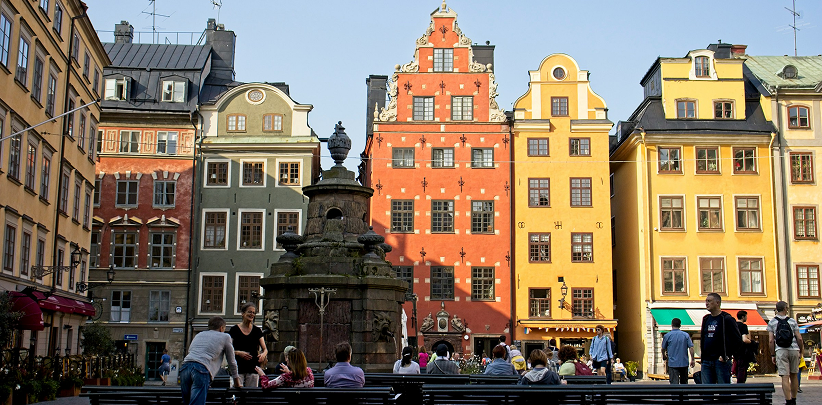
Welcome to Stockholm University in the capital of Sweden, characterised by openness, innovation and collaboration. Here, independent research is conducted in an international setting.

Come work with us at Stockholm University

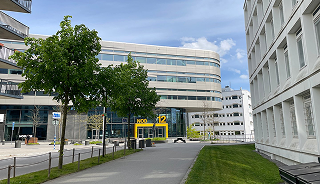
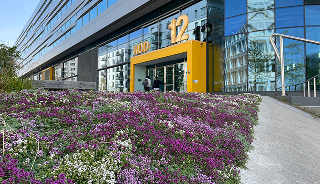
The university has more than 5,400 employees working in different campuses, with the main campus situated in the National City Park of Stockholm. The Department of Computer and Systems Sciences (DSV) has its own campus in the heart of Kista, known for its many ICT companies. In the Kista ecosystem, R&D activities are carried out by academic institutions, new startups and world-leading tech companies in collaboration.

Management and employees work strategically to develop the University to maintain the highest international quality and to be resource efficient.

Read more here

Stockholm University is one of the highest-ranked universities in the world and one of the top universities in Europe according to several well-established university rankings.

100

ARWU Shanghai 2025

201-250

THE 2026

147

QS World University 2026

Professionalism, competence and excellence

Stockholm University strives to attract and recruit talents. Our researchers and teachers are characterised by professionalism, competence and academic excellence.

Our administrative staff have an important support function that requires competence at all levels through robust recruitment processes, ongoing competence development and focus on career development opportunities.

We work for equality, gender equality and equal treatment. We value our employees' different backgrounds and skills. Everyone should be treated equally and in a respectful manner.

Career and professional development

Career and professional development

Stockholm University offers many opportunities for career development - whether you are a doctoral candidate, teacher, researcher or another member of staff.

To support your wellbeing, growth and professional development, employees have access to introduction programmes, staff collaboration initiatives and a range of internal training activities.

Read more here
Employee benefits

Employee benefits

As an employee at Stockholm University, you have access to a range of benefits, including wellness allowances, parental pay, paid vacation from your first year of employment, professional development opportunities, medication reimbursement and the possibility to work remotely.

Read more here
Working environment

Working environment

Stockholm University strives to provide a safe, supportive and sustainable working environment in which both employees and students are treated equally and with respect.

The work on equal opportunities aims to promote everyone's rights and opportunities, regardless of gender, gender identity or gender expression, ethnic origin, religion or other belief, disability, sexual orientation or age.

Read more here
Working environment

An international university

With researchers, teachers and students from around the world, Stockholm University offers a truly international academic environment.

English is widely used in research and teaching, and the University actively fosters global partnerships and collaborations.

To support international staff, practical relocation services and free Swedish language courses are available.

Read more here

Work and life in Sweden

Work and life in Sweden
 

Strong academic freedom

Academic freedom is a cornerstone of Swedish research and is legally protected. Researchers are free to choose their research questions, methods and teaching approaches, and to publish their results without external interference. This independence is supported by high standards of research integrity, open academic governance and Sweden's long tradition of researcher autonomy.


A sustainable life

Sweden offers a professional environment that supports both academic excellence and personal wellbeing. Employees are entitled to at least 25 days of paid annual leave, and parents benefit from more than a year of paid parental leave per child.


Stockholm as an innovation hub

Sweden is consistently ranked among the world's most innovative countries, combining a strong research tradition with long-term national investment in knowledge and progress. As the capital, Stockholm is a dynamic hub for research-driven companies, start-ups and global brands. The University's location enables close collaboration with industry, public authorities and civil society, helping translate research into real-world impact.

Descubra empleadores relacionados